Oyster Story
Chronometric precision, waterproofness, and self-winding: these three key challenges and fundamental watchmaking achievements would cement the success of a visionary and forge the destiny of a revolutionary watch.

In 1910, a Rolex watch was awarded a certificate of chronometric precision from the Official Watch Rating Centre in Bienne, Switzerland. This wristwatch was therefore proven to be as precise as a pocket watch, the benchmark at the time. A few years later, in 1914, the watchmaking world was astounded once more when another Rolex wristwatch received a ‘Class A’ certificate from Great Britain’s Kew Observatory. This distinction had hitherto been generally reserved for hefty marine chronometers.
Through these achievements, Rolex made a major contribution to the credibility of the wristwatch, which had previously been regarded as mere jewellery and highly unreliable in terms of accuracy. Having overcome the challenge of precision, Rolex turned its attention to designing a flawless armour to protect its movements.
From Oyster to Oyster Perpetual
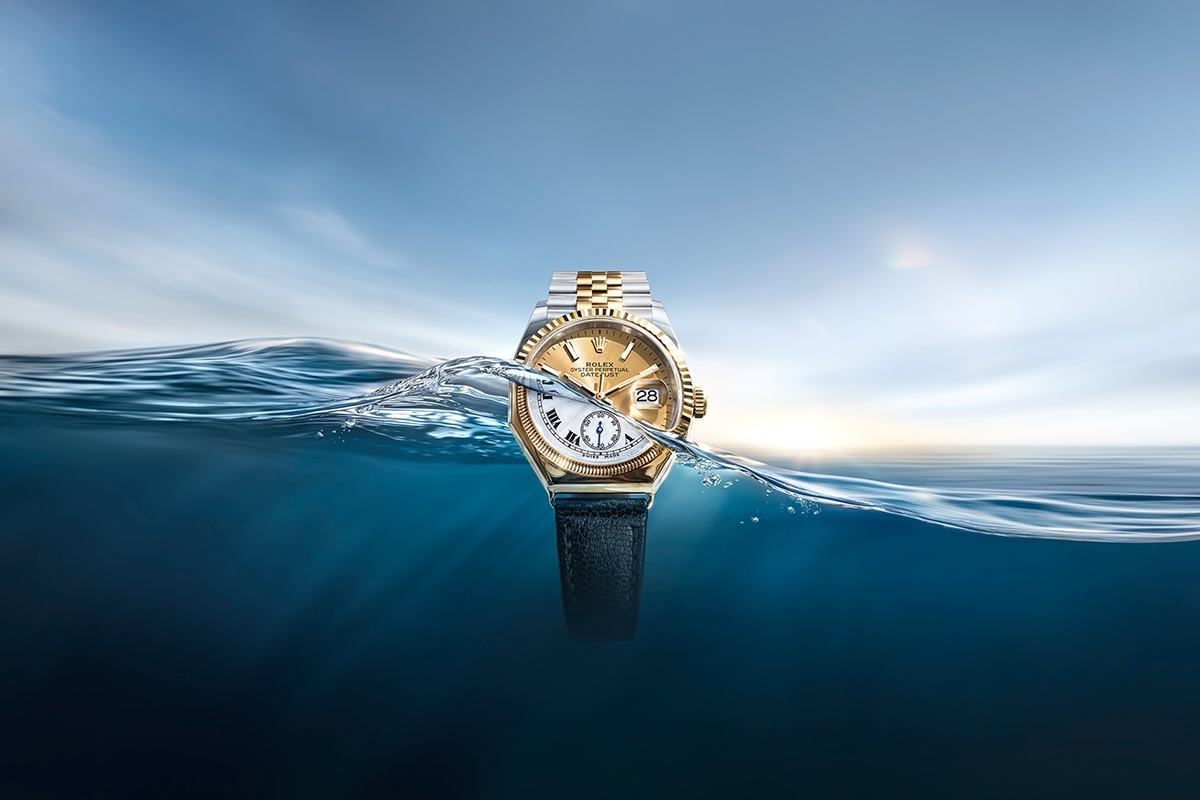
The invention of the Oyster in 1926 was a major breakthrough in watchmaking. The case, which was to lend its name to a wristwatch, was entirely waterproof and dustproof thanks to its system of screwing down the bezel, case back and winding crown against the middle case.
This watchmaking revolution would be put to the test in 1927 when Englishwoman Mercedes Gleitze swam the Channel between France and England, spending over 10 hours in freezing seas. The watch that she wore – a gold Oyster – remained in perfect working order.
The development in 1931 of a groundbreaking self-winding system, the Perpetual rotor, further enhanced the performance of Rolex watches. Precise, waterproof and now autonomous, the Oyster had become ‘Perpetual’.

A living laboratory


A collection driven by innovation
The history of the Oyster is also marked by the many accomplishments of iconic Rolex wearers.
The brand supports athletes whose expertise, rigour, technique, and ability to inspire younger generations have helped to shape the history of their sport. Rolex continues to demonstrate this commitment by partnering with the most prestigious institutions in the fields of equestrianism, golf, motor sport, tennis and sailing.
This quest for excellence is also what drives the individuals championed by the Perpetual Arts Initiative, whose talent leaves a lasting impression on global culture. By supporting these masters of emotion, as well as the institutions where they perform, Rolex strives to preserve and pass on the fundamental human values it holds dear.
This commitment to the future is also expressed through the Perpetual Planet Initiative, driven by those who share their expertise in order to tackle the environmental challenges of our time. Today, these changemakers build on the legacy of the early explorers, striving to increase our understanding of the world in order to find ways to protect it.

The new Superlative Chronometer certification